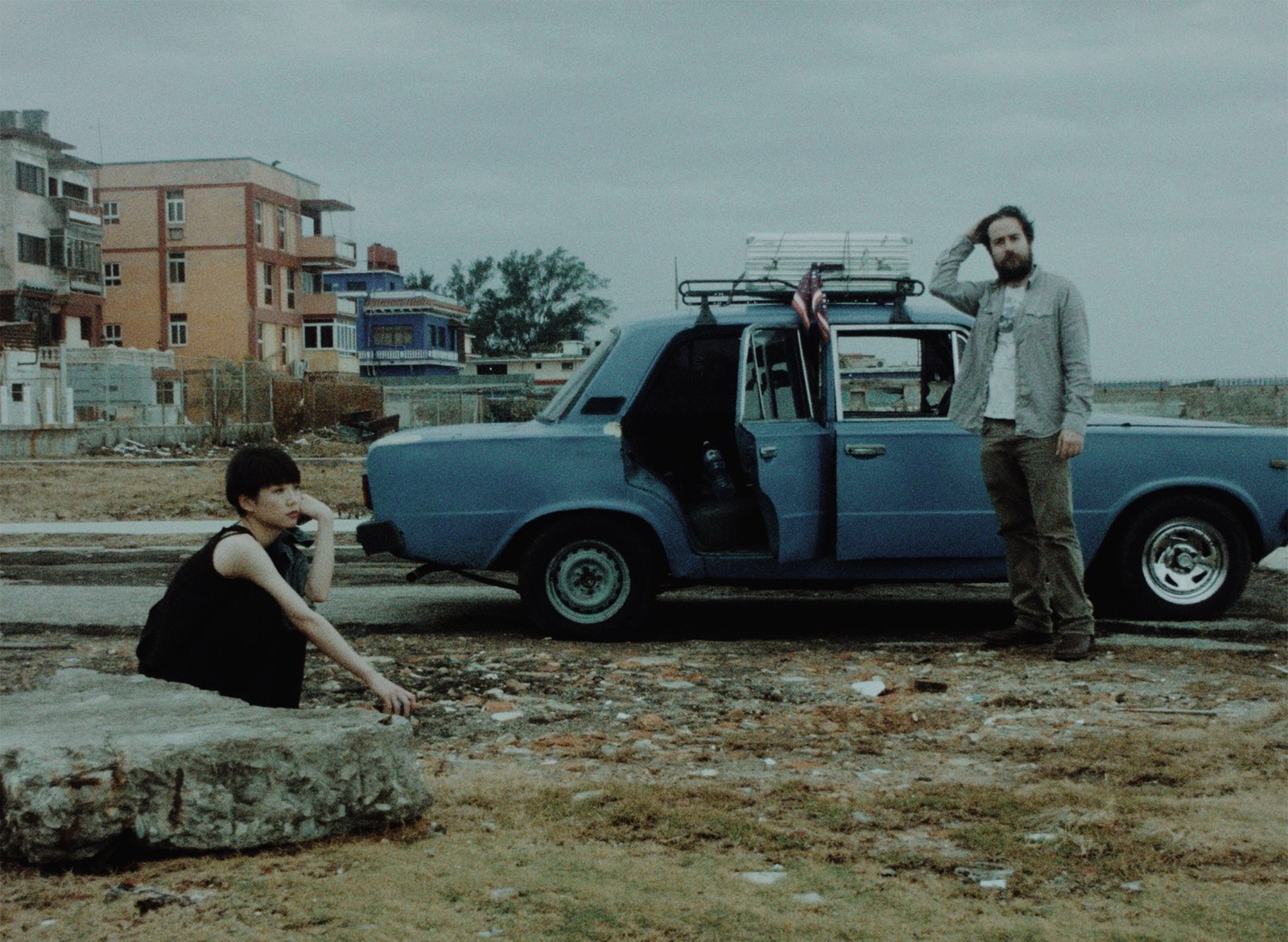
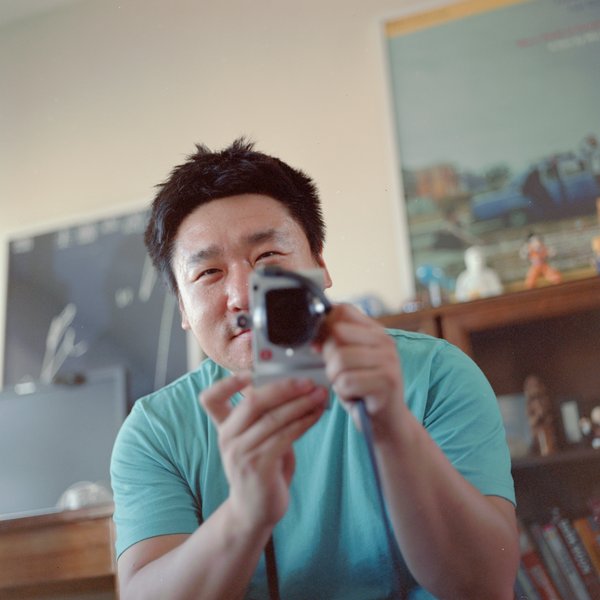
这是一次阿巴斯在古巴举办的电影作者工作坊。从世界各国选了约五十位青年导演,在阿巴斯的指导下各拍摄一部短片。社会主义古巴,遥远又神秘。我知道这次机会难得,为不白来一趟出发前把可能用到的所有设备零件、摄影机、脚架、镜头和录音器材样样清点齐备,反复精简压缩到一个行李箱中,并且带着已经构思好并颇为得意的一个关于阶级斗争和解放物化女性的故事,准备拍出一个短篇版本。我和来自日本的演员大竹佑季提前了几天到达哈瓦那,下了飞机就开始马不停蹄地勘景筹备。依赖于年轻旅馆经理阿瑞尔的很多帮助,我们过于幸运地迅速找到了理想的场景、几位演员、豪宅,还有剧情所需的一只公鸡。我们日夜颠倒地拍摄了很多素材,拍得精疲力竭才告一段落。
It was an Abbas Kiarostami filmmaking workshop in Cuba. About fifty young directors selected from around the world, each to shoot a short film under Abbas's guidance. Socialist Cuba — remote and mysterious. I knew the opportunity was rare, so before leaving I inventoried every piece of equipment I might need — camera, tripod, lenses, sound gear — paring it all down into a single suitcase. I also brought a story I'd already structured and was rather proud of, about class struggle and the liberation of an objectified woman, ready to shoot a short version. My Japanese actor Yuki Otake and I arrived in Havana a few days early and hit the ground running. With generous help from Ariel, a young hotel manager, we were impossibly lucky — quickly finding the ideal locations, several actors, a mansion, even a rooster the script required. We shot day and night until we were completely spent.
我们打了一辆车前往工作坊所在地——位于哈瓦那郊外大概四十公里处的古巴国际电影学院,路途中却迷了路,天色渐暗,我们只是在葱绿的林间路上绕弯,名叫马里奥的司机四处向沿途村镇上的人们打听哪儿有电影学校,可是知道的人寥寥无几。"空气里怎么全是香菜的味道?"我问。"人们在做晚饭。"马里奥说。直到晚上几经辗转才迷迷糊糊来到著名的古巴国际电影学院报到,见大堂墙上写满各位曾经莅临此地的名导演的巨型亲笔涂鸦。中间最大的一个,是科波拉写的"艺术永不睡眠"。
We took a car to the workshop venue — the Cuban International Film School, about forty kilometers outside Havana. We got lost on the way. Dusk fell as we wound through green jungle roads, our driver Mario stopping to ask villagers where to find a film school. Few had any idea. "Why does the air smell like coriander?" I asked. "People are making dinner," Mario said. It was late by the time we stumbled into the famous school and checked in. The lobby walls were covered in enormous graffiti by famous directors who had visited. The largest, dead center, was Coppola's: "Art Never Sleeps."
初次见到阿巴斯,是次日上午学校组织五十个导演乘大巴车去一个预先约好的村庄寻找灵感。一些村民也已答应学校帮我们出演角色。土路上有鸡鸭、牛羊在溜达着,一群好奇的孩子涌上来看我们这群人。来自全世界的导演们举着长枪短炮,跳下大巴,看什么都新鲜,对着村庄、村民、孩子、晾衣架上的被单一通拍。我自忖已经有了故事,就没有拍什么,只是试着和小孩聊天给他们画些速写,两个在摔跤的男孩,一个推着自行车以后想当模特的女孩。远远看见阿巴斯和翻译在栅栏边上静静拿着DV拍摄一头黑牛,我本想上前寒暄,没想到他们巍然不动拍牛拍了很长时间,我侍立一旁好一阵才等到他们转身。可能因为紧张,我说出口的第一句话,居然是问我们能不能合张影。阿巴斯不紧不慢一边把手持摄像机收进腰间的小拉链包,一边收着脚架,步履不停地说:"我们还有很多时间"。
I first saw Abbas the next morning, when the school bused all fifty directors to a pre-arranged village for inspiration. Some villagers had agreed to act for us. The dirt road had chickens, ducks, cattle wandering about, and a swarm of curious children rushed to see us. Directors from every country jumped off the bus with their cameras, filming everything — the village, the people, the children, laundry on the line. I already had my story, so I didn't shoot much. Instead I chatted with the kids and sketched them: two boys wrestling, a girl pushing a bicycle who wanted to be a model someday. From a distance I saw Abbas and his translator quietly filming a black cow through a fence with a DV camera. I wanted to go say hello, but they stood motionless, filming the cow for a long time. I waited nearby until they finally turned. Nervous, the first thing out of my mouth was asking if we could take a photo together. Abbas, unhurried, tucked the handheld camera into the small zippered pouch on his belt, folded the tripod, and said without breaking stride: "We still have plenty of time."
他看起来只有五十几而不是七十多岁,身材魁梧,一位温文尔雅的绅士,深色眼镜背后的深邃眼神是坚毅和澄澈的。回到礼堂里,他请每位导演轮流起立作自我介绍,并讲讲各自此行准备拍摄的电影。轮到我站起来时,我脱口而出另一个故事:"我叫牛涵,从中国来。想拍一个充满艺术电影理想的美国农村青年导演卖掉几头自己心爱的牛凑足旅费,邀异地恋的女友从世界两端相聚来到古巴参加阿巴斯、戈达尔等左派电影大师的一场社会主义电影峰会。驾车赶赴偏远会场途中的谈话间,发现女友似乎已变心。忐忑的导演一行在荒凉的大地上迷了路。没有网络、语言不通,无论如何也找不到大师们的踪迹。问遍当地农民无人知晓,只有牛羊漫野,暮色苍茫,空气里弥漫着令人不快的香菜气息。最后终于找到阿巴斯时,大师在一棵树下拍落叶,导演上去索取一张合影,大师轻轻对他说:'秋天来了,叶子也该落地...'。"全场都笑。
He looked no older than fifty, though he was past seventy — a tall, elegant gentleman, his deep-set eyes behind dark glasses both resolute and clear. Back in the auditorium, he asked each director to stand, introduce themselves, and describe the film they planned to make. When my turn came, I abandoned my prepared pitch and improvised a different story: "I'm Niu Han, from China. I want to make a film about a young American rural director, full of art-film ideals, who sells a few beloved cows to fund a trip. He invites his long-distance girlfriend to meet him in Cuba for a socialist film summit led by masters like Abbas and Godard. On the drive to the remote venue, he realizes she may have fallen out of love. The anxious director gets lost on the barren land. No internet, no common language, no trace of the masters anywhere. The locals know nothing. Only cattle roaming the fields, dusk gathering, the air filled with an unpleasant smell of coriander. When they finally find Abbas, the master is filming falling leaves under a tree. The director asks for a photo. The master says softly: 'Autumn has come. The leaves should fall...'" The room laughed.
阿巴斯问:"那美国导演在哪?""在这房间里应该就有。"全场又笑。"那女友呢?""带来了古巴。"全场再笑。他笑着说:"为什么总是中国人最会拍电影?非常好的喜剧,我很喜欢。"
Abbas asked: "Where is this American director?" "He should be in this room." More laughter. "And the girlfriend?" "Brought her to Cuba." More laughter. He smiled: "Why is it always the Chinese who are best at making films? A very good comedy. I like it very much."
他给自鸣得意的学生们很多鼓励,却说自己并不是个职业的电影导演,拍电影只是他所做的其中一件事。他也摄影、写诗,画不拿出来示人的画。曾经最想当一名画家,却失败了,做过广告,当过交警,连美术学院都读了很多年才毕业。阿巴斯演讲时说波斯语,由他的翻译口译成西班牙语,再由学院一位老师在台下小声说成英语,稍不注意,就会漏听一段。我为了边拍摄边记录,听得更断断续续,印象最深的一句话是:"比起电影,自然的东西给我更多启发","电影最终,是关于solitude"。
He was generous with encouragement but said he wasn't really a professional film director — filmmaking was just one of the things he did. He also photographed, wrote poetry, made paintings he never showed anyone. He had most wanted to be a painter but failed. He'd worked in advertising, been a traffic cop, taken many extra years to finish art school. Abbas spoke in Persian, his translator rendered it into Spanish, and a school teacher whispered it into English from the audience. Miss a beat and you'd lose a passage. I was filming while trying to listen, so I caught it in fragments. The line that stayed with me: "More than cinema, it is nature that inspires me." And: "Cinema, in the end, is about solitude."
另一天,他给我们放映了自己尚未完成的影片,一段段空镜,在雪中奔跑的马。他讲到期盼迈向拍摄一种未完成的电影,未完成,意即让电影不是由作者完成,而是一大半在观众心中发生。把电影真正的故事和意义保持在画面之外,如同暗语般给予几点提示,让其余在别人的脑中浮现,取消导演作为指导者或讲述者的位置,接受现实的回馈,而不是试图再造一个现实。
Another day, he screened his own unfinished work — fragments of empty shots, horses running through snow. He spoke of aspiring to make a kind of unfinished cinema: unfinished meaning the film is not completed by its author, but mostly happens inside the viewer's mind. Keep the real story and meaning outside the frame, offer a few cues like a secret code, let the rest surface in other people's heads. Dissolve the director as instructor or narrator. Accept what reality gives back, rather than trying to reconstruct another reality.
影片的筹备、拍摄、剪辑都在接下来的十天里发生,阿巴斯与我们同吃、住在电影学院的宿舍区域,在这期间他自己也在拍一部短片,一次又见他独自静静地从远处拍一位农人牧牛(他似乎很喜欢拍牛),我看见牛群中有一头牛是纯白的。他和大家如朋友一样聊天,极有耐心地随时看素材和剪辑。"你对这个导演比对女孩似乎更有兴趣","你需要拍一段她到达哈瓦那的过程。"
Pre-production, shooting, and editing all happened over the next ten days. Abbas lived and ate with us in the school dormitories. During this time he was also making his own short film. Once again I spotted him alone, quietly filming a farmer herding cattle from a distance — he seemed to really like filming cows. Among the herd I noticed one was pure white. He chatted with everyone like a friend, endlessly patient, always willing to review footage and edits. "You seem more interested in the director than in the girl." "You need to shoot a scene of her arriving in Havana."
这十天里,我尽量遵循这个准则,在很多人的帮助下拍摄了这部影片。当导演的角色缺席时,现实和自然的确回馈了我们远远更多更丰富的故事:同在工作坊的美国导演弗兰克·莫斯利在拍摄他自己的短片之余也抽空扮演了我们片中的导演;饰演司机的司机亚力杭德罗是一位曾是古巴国家单车队运动员的朴实大叔,我们边拍他边在旁边抽烟看着笑;翻译薇薇安是一位生长在纽约但是五十多年来未能再踏入美国的古巴美国人,给每个人讲自己小时候曾被切·格瓦拉亲吻过的故事;海边旅馆的主人芙罗拉曾是一名演员,多年来经营着一个剧场。我也欣然接受了现实与原构思的区别,因为现实显然更好。实拍结尾也比构想更好,大师临离开时,不甘心的青年导演上前请求合影,原本已经上了车的大师也慷慨下车来与青年导演合了影,但那倒霉导演的iPhone没储存空间了,竟然没照上。再追去时大师车已驶远,颓废回到电影学院,和女友在"艺术永不睡眠"的大字下相对无言。
Over those ten days, I tried to follow his principle, and with many people's help shot the film. When the director stepped aside, reality and nature did give back far richer stories: Frank Mosley, an American director also at the workshop, played the director in our film between shooting his own; our driver Alejandro, a former member of the Cuban national cycling team, was an easygoing man we filmed while he smoked and watched us with amusement; our translator Vivian was a Cuban-American born in New York who hadn't set foot in the U.S. for over fifty years, and told everyone about being kissed by Che Guevara as a child; Flora, the owner of the seaside hotel, had been an actress and ran a theater for years. I gladly accepted the distance between reality and my original plan, because reality was obviously better. The actual ending turned out better than what I'd imagined, too: as the master was leaving, the young director — unwilling to let go — went up to ask for a photo. The master, already in the car, graciously stepped back out and posed with him. But the hapless director's iPhone had no storage left — the photo never saved. By the time he ran after the car, it was already gone. He trudged back to the film school and stood with his girlfriend beneath the giant letters: "Art Never Sleeps." Neither of them said a word.
原本还想着在形式上玩花样,戏仿阿巴斯的电影,致敬如《何处是我朋友的家》中的遍寻不获和《樱桃的滋味》中的漫长车内对话。在拍摄过程中才发觉我的个人意图往往都变成了冗余的自作聪明。我看见如果去除电影狭义上的指导,反而会接收到远远更丰富的世界。片中导演的角色基本投射了我自己所有的脆弱和无聊的综合体,我几乎是在拍一部纪录片,讲一个自以为是的人逐渐被剥去披覆在身上的一切依赖和身份证明之后被迫学习真正面对自己的故事。
I had wanted to play formal games — pastiche Abbas's films, nod to the futile search in Where Is the Friend's House? and the long car dialogues in Taste of Cherry. Only during shooting did I realize my personal intentions kept turning into redundant cleverness. I saw that if you remove the director's narrow guidance, you receive a far richer world. The director character in the film was basically a projection of all my own fragility and banality. I was almost making a documentary — about a person who thinks he knows, gradually stripped of every crutch and credential, forced to learn to truly face himself.
十日之间,五十位来自不同国家的导演多少都成为了朋友,临别前的最后一天,五十部十几分钟的短片集结在一起放映了一共超过十个小时,阿巴斯一直同大家坐在黑暗中观看,从早晨看到天黑。放映结束之后逐一单独谈话,给予详细的评价和指导,直至夜深。
Over the ten days, fifty directors from different countries became something like friends. On the last day before parting, all fifty short films — each about ten minutes — screened back to back, over ten hours total. Abbas sat with us in the dark the entire time, from morning until nightfall. Afterward he spoke with each director privately, giving detailed critiques and guidance, deep into the night.
轮到我时,阿巴斯说我的片子没有他期待的那么好。他说我的问题在于拍摄之前没有想透彻——每一场戏,我应该从哪个角度开始拍,从哪儿切到哪儿,再从哪儿切到哪儿,都应该在开机前想得清清楚楚。该拍的反应镜头、该有的过渡,一个都不能少。他觉得我的功课应该在计划这一块。他的深邃眼睛近距离看着我,让我觉得有些无地自容,反而不记得他对我说的别的许多话。
When my turn came, Abbas said my film wasn't as good as he had hoped. My problem, he said, was that I hadn't thought things through before shooting — every scene, which angle to start from, where to cut, then where to cut next, all of it should be completely clear before the camera rolls. Every reaction shot, every transition, nothing can be missing. My homework was in planning. His deep-set eyes studied me at close range, and I felt so exposed that I could barely remember the many other things he said.
工作坊结束后几个月,阿巴斯就过世了。没拍的合影成为遗憾,其实我们没有很多时间。
A few months after the workshop ended, Abbas passed away. The photo we never took became a regret. In truth, we didn't have much time.